Technology |
Click on heading to view details |
We use the most up to date equipment available, together with the most comfortable dental chair made.
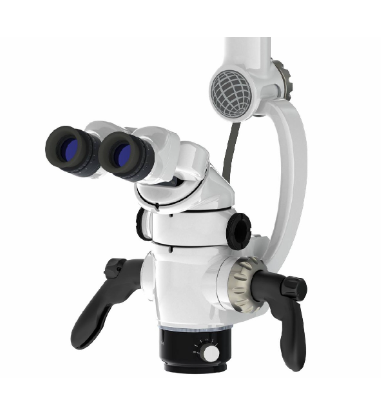 The Global A-Series operating microscope is used in most treatments and used throughout endodontic (root canal) treatment.
The increased magnification, adjustable from 2.1X (2.1 times naked eye vision) to 19.2X enables the dentist to clearly see, and therefore diagnose and treat to a very high standard, thereby improving treatment outcomes.
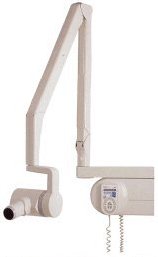 We have used digital x-rays for over 20 years, they allow rapid visualisation and magnification of the radiographic image, also aiding in the diagnosis and treatment process.
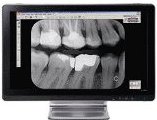 The radiation dosage is considerably reduced (approximately 80% less than conventional film x-rays).
As there are no chemicals used, this is also kinder to the environment.
 Planmeca ConeBeam CT Scanner. This allows us to take 3D xray images of a number of teeth or of all the teeth for detailed diagnostics with 3D imaging.
Where a ConeBeam CT scan is necessary during root canal treatment there is no additional fee for the scan.

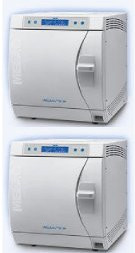 We use the latest barrier techniques along with 2 vacuum autoclaves, to eliminate the risk of cross contamination and ensure superior infection control.
Instruments are ultrasonically cleaned before being autoclaved.
Endodontic (root canal) instruments are all single patient use only.
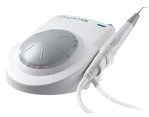 Ultrasonic equipment (Satelec P5) is used under the microscope during root canal treatment to identify and open calcified canals, to break up and remove pulp stones, and also to aid in the removal of posts in canals during retreatment.
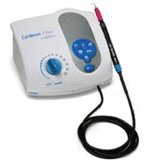
Ultrasonic equipment (Cavitron) is used to scale and clean teeth as it is both gentle and efficient.
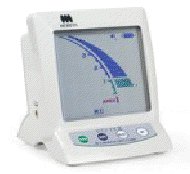 The Morita Zx is regarded as the gold standard apex locator.
This allows electronic identification of the termination of the root canal, to allow for accurate cleaning, shaping and filling to the predetermined length.
 For down pack and back fill, respectively, of a root canal space.
This achieves the optimal sealing of the root canal or canals, by allowing the condensation of heated gutta percha into all the ramifications, isthmus space and lateral canals, and not just the main created canal space.
Rubber dam isolation is used routinely for most treatment, and always for root canal treatment. This allows complete isolation of the tooth (or teeth) in question from the oral environment therefore preventing contamination of the tooth and/or filling material. In this way it is easier to provide better quality treatment.
"Rubber dam offers substantial advantages and should be used whenever practicable. In addition to enhancing the quality of operative care, the use of rubber dam virtually abolishes saliva/blood splatter and aerosol. Non-latex rubber dam is available" - from current Dental Council Guidelines
Rubber dam isolation, while not widely used, is far from new - having been invented in 1864 by a New York dentist, Sanford C. Barnum.
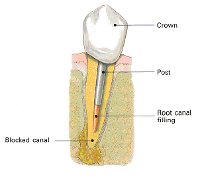 We use specific crown (Kavo Coronoflex) and post (Ruddle PRS) removal equipment, as well as ultrasonics, to gently disassemble crowns and posts to allow retreatment of failing root canal treatments.
We use electric motors for our handpieces (dental drills) and for rotary instrumentation of root canals. This leads to a smoother, quieter experience for the patient.